May 30, 2017

Six Kingdoms: Bacteria

BACTERIAL CELL
Bacteria are prokaryotic. The genetic material in their cells is not contained in a nucleus.
Each bacterial cell uses energy, grows and develops, responds to its surroundings, and reproduces.


SHAPE OF A BACTERIAL CELL 
Bacteria have three basic shapes: spherical, rodlike, or spiral. The shape of bacterial cell is determined by the chemical makeup of its outermost structure - the cell wall which is rigid and helps to protect the cell.

STRUCTURE OF A BACTERIAL CELL
Inside the cell wall is the cell membrane, which controls what materials pass into and out of the cell.
Inside the cell membrane, the cytoplasm contains a gel-like material. Ribosomes, the sites where proteins are produced, are located in the cytoplasm. The cell's genetic material, which looks like a thick, tangled string, is also located in the cytoplasm.
The genetic material contains the instructions for all the cell's functions, such as how to produce proteins on the ribosomes.
A flagellum is a long, whiplike structure that extends from the cell membrane and passes through the cell wall. A flagellum helps a cell to move by spinning in place like a propeller. A bacterial cell can have many flagella, one, or none. Most bacteria that do not have flagella cannot move on their own.

Source: Boundless.com


TWO KINGDOMS OF BACTERIA
Archaebacteria - Many live in extreme environments, such as: hot springs, intestines, sewage etc. 
Eubacteria - Most do not live in extreme environments.


REPRODUCTION IN BACTERIA
When bacteria have plenty of food, the right temperature, and other suitable conditions they thrive and reproduce frequently.

Asexual Reproduction
Bacteria reproduce by binary fission, a process in which one cell divides to form identical cells. Asexual reproduction is a reproductive process that involves only one parent and produces offspring that are identical to the parent. In binary fission, the cell first duplicates its genetic material and then divides into two separate cells. Each new cell gets its own complete copy of the parent cell's genetic material as well as some of the parent's ribosomes and cytoplasm.

Sexual Reproduction
Sexual reproduction called conjugation, involves two parents who combine their genetic material to produce a new organism which differs from both parents. During conjugation one bacterium transfers some of its genetic material into another bacterial cell through a thin, threadlike bridge that join the two cells. After the transfer, the cells separate. Conjugation results in bacteria with new combinations of genetic material.


OBTAINING FOOD
Some bacteria are autotrophs and make their own food. Autotrophic bacteria make food in one of two ways: by capturing and using the sun's energy as plants do or by using the energy from chemical substances in their environment. 
Some bacteria are heterotrophs - they obtain food by consuming autrophs or other heterotrophs.


RESPIRATION
Respiration is the process of breaking down food to release its energy. 
Most bacteria need oxygen to break down their food, but a few kinds of bacteria do not need oxygen for respiration.


ENDOSPORE FORMATION
Some bacteria can survive harsh conditions by forming endospores which are small, rounded, thick-walled, resting cells that form inside a bacterial cell. They contain the cell's genetic material and some of its cytoplasm.


BACTERIA IN THE LIVING WORLD
Bacteria are involved in fuel and food production as well as in environmental recycling and cleanup. However, some bacteria do cause diseases and other harmful effects.

Fuel
The archaebacteria that live in oxygen-free environments, such as the thick mud at the bottom of a lake or swamp, produce a gas called methane.

Food
The activities of helpful bacteria produce, cheese, yogurt, apple cider, olives and sauerkraut. But some bacteria cause food to spoil when they break down the food's chemicals.

source: eatwisconsincheese.com
Environmental Recycling
Heterotrophic eubacteria which live in the soil, are decomposers - organisms that break down large chemicals in dead organisms into small chemicals and then return basic chemicals to the environment for other living things to reuse. Other recycling eubacteria live in swellings on the roots of some plants, such as peanuts and soybeans. There, they convert nitrogen gas from the air into nitrogen compounds that the plants need to grow.

Environmental Cleanup
Some bacteria help to clean up Earth's land and water. Scientists have put these bacteria to work cleaning oil spills in oceans and gasoline leaks around gas stations.

source: CNN
Health
An antibiotic is a chemical that can kill bacteria without harming a person's own cells. 

Source: Young scientist journal 

May 3, 2017

Biology: Taxonomy

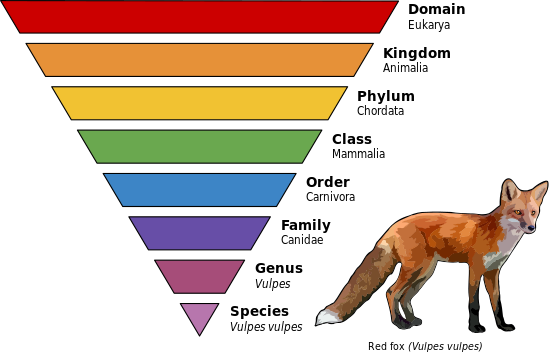
Animals are classified in 7 levels: Domain, Kingdom, Phylum, Class, Order, Family, Genus, Species.


Source: Wikipedia

Spotted Hyena

Source: BBC
Domain: Animalia
Kingdom: Chordata
Class: Mammalia
Order: Carnivora
Family: Hyaenidae
Genus: Crocuta
Species: Crocuta Crocuta

April 24, 2017

Zasady dynamiki Newtona I i II

I  ZASADA DYNAMIKI NEWTONA

Jeżeli na ciało nie działają żadne siły lub działające siły się równoważą, to ciało pozostaje w spoczynku lub porusza się ruchem jednostajnym prostoliniowym.

II  ZASADA DYNAMIKI NEWTONA

Jeżeli na ciało działa niezrównoważona siła, porusza się ono ruchem zmiennym z przyspieszeniem wprost proporcjonalnym do działającej siły. Przyspieszenie ciała, na które działa stała niezrównoważona siła, jest tym mniejsze, im większa jest jego masa:
a = F/m


F - wartość siły
m - masa ciała
a - przyspieszenie ciała

1 N jest to siła, która ciału o masie 1 kg nadaje przyspieszenie 1 m/s².

Source: Physics4kids


Przyspieszenie ciała, na które działa niezrównoważona siła, jest wprost proporcjonalne do działającej siły.
Przy danej wartości siły działającej na ciało przyspieszenie jest tym mniejsze, im większa jest masa ciała.

Spadające swobodnie ciała poruszają się ruchem jednostajnie przyspieszonym. Przyspieszenie, z jakim w pobliżu Ziemi porusza się swobodnie ciało, nazywa się przyspieszeniem ziemskim.

g≈9,81 m/s²

Fg=mg

Fg - siła ciężkości (grawitacji)
m - masa ciała
g - przyspieszenie ziemskie

Czas swobodnego spadania ciała nie zależy od jego masy.

Masa jest miarą bezwładności ciała.

April 23, 2017

Satellites and Centripetal force

A satellite is any object that travels around another object in space.
An artificial satellite is a device launched into orbit around Earth. Artificial satellites are designed for many purposes. They are used in space research, communications, military intelligence, weather analysis, and geographical surveys.

Source: Wikipedia

Any force that causes an object to move in a circle is called a centripetal force ("center seeking").

An object traveling in a circle is accelerating because it is constantly changing direction. For a satellite the centripetal force is the gravitational force that pulls the satellite toward the center of the Earth.

Source: Science for Kids 

Satellites in orbit around Earth continually fall toward Earth, but because Earth is curved they travel around it. In other words, a satellite is a projectile that falls around Earth rather than into it. A satellite does not need fuel because it continues to move ahead thanks to its inertia. At the same time, gravity continuously changes the satellite's direction.
The speed with which an object must be thrown in order to orbit Earth turns out to be about 7,900m/s!

April 5, 2017

Newton's Third Law of Motion

If one object exerts a force on another object, then the second object exerts a force of equal strength in the opposite direction on the first object.

MOMENTUM = Mass × Velocity

The unit for momentum is kilogram-meters per second (kg⁤∗ms/s). Like velocity and acceleration, momentum is described by its direction as well as its quantity.

Law of Conservation of Momentum
The total momentum of any group of objects remains the same unless outside forces act on the object.

Source: successify.net


February 6, 2017

Biology: Advances in genetics

Methods that people have used to develop new organisms with desirable traits are:
  • Selective breeding
                selecting a few organisms with desired traits to serve as parents of the next generation.
  • Inbreeding
                crossing two individuals that have identical or similar sets of alleles. The new organisms are very similar to those of their parents.
  • Hybridization
                crossing two genetically different individuals. The hybrid organism that results is bred  to have the best traits from both parents.
  • Cloning
               a clone is an organism that is genetically identical to the original organism it was produced from. A clone  has exactly the the same genes as the parent organism.
  • Genetic Engineering
               in this  process genes from one organism are transferred into the DNA of another organism.
Dolly, the first cloned sheep.
Source: Daily Mail

The Human Genome Project:
A genome is all the DNA in one cell of an organism.
The main goal of the Human Genome Project is to identify the DNA sequence of every gene in the human genome.


January 19, 2017

Airbus Families

A350XWB


A350-800

Range: 15,200km
Passengers (Typical Seating): 280
Max Payload: 12.95t
Wing Span: 64.75m
Overall length: 60.54m
Height: 17.05m
Engine: 2x RR Trent XWB
Max fuel capacity: 138,000L

A350-900
Range: 15,000km
Passengers (Typical Seating): 325
Max Payload: 16t
Wing Span: 64.75m
Overall length: 66.8m
Height: 17.05m
Engine: 2x RR Trent XWB
Max fuel capacity: 138,000L

A350-1000
Range: 14,800km
Passengers (Typical Seating): 366
Max Payload: 20.89t
Wing Span: 64.75m
Overall length: 73.78m
Height: 17.08m
Engine: 2x RR Trent XWB
Max fuel capacity: 156,000L

A380


Range: 15,200km
Passengers (Typical Seating): 544
Max Payload: - t
Wing Span: 79.75m
Overall length: 72.72m
Height: 24.09m
Engine: 4x GP 7200, or RR Trent 900
Max fuel capacity: 320,000L

A320

A318
Range: 5,750km
Passengers (Typical Seating): 107
Max Payload: 11.1t
Wing Span: 34.10m
Overall length: 31.44m
Height: 12.56m
Engine: 2x PW6000A, or CFM56-5B
Max fuel capacity: 24,210L

A319
Range: 6,950km (with Sharklets)
Passengers (Typical Seating): 124
Max Payload: 13.2t
Wing Span: 35.80m
Overall length: 33.84m
Height: 11.76m
Engine: 2x CFM56-5B, or V2500-A5
Max fuel capacity: 30,190L

A320
Range: 6,100km (with Sharklets)
Passengers (Typical Seating): 150
Max Payload: 16.6t
Wing Span: 35.80m
Overall length: 37.57m
Height: 11.76m
Engine: 2x V2500-A5, or CFM56-5B
Max fuel capacity: 27,200L

A321
Range: 5,950km (with Sharklets)
Passengers (Typical Seating): 185
Max Payload: 21.2t
Wing Span: 35.80m
Overall length: 44.51m
Height: 11.76m
Engine: 2x V2500-A5, or CFM56-5B
Max fuel capacity: 30,030L

A330

A330-200
Range: 13,450km
Passengers (Typical Seating): 247
Max Payload: 36,4t
Wing Span: 60.30m-]
Overall length: 58.82m
Height: 17.39m
Engine: 2x PW4000, GE CF6-80E1, or RR Trent 700-]
Max fuel capacity: 139,090L

A330-300
Range: 11,750km
Passengers (Typical Seating): 277
Max Payload: 45.9t
Wing Span: 60.30m
Overall length: 63.69m
Height: 16.83m
Engine: 2x PW4000, GE CF6-80E1, or RR Trent 700
Max fuel capacity: 97,530L

A340

A340-200
Range: 12,400km
Passengers (Typical Seating): 261
Max Payload: 30.8t
Wing Span: 60.30m
Overall length: 59.4m
Height: 16.80m
Engine: 4x CFM56-5C4/P
Max fuel capacity: 155,040L

A340-300
Range: 13,500km
Passengers (Typical Seating): 277
Max Payload: 43.5t
Wing Span: 60.30m
Overall length: 63.69m
Height: 16.91m
Engine: 4x CFM56-5C4/P
Max fuel capacity: 140,640L

A340-500
Range: 16,670km
Passengers (Typical Seating): 293
Max Payload: 43.3t
Wing Span:63.45m
Overall length: 67.93m
Height: 17.28m
Engine: 4x RR Trent 500
Max fuel capacity: 215,260L

A340-600
Range: 14,450km
Passengers (Typical Seating): 326
Max Payload: 55.6t
Wing Span:63.45m
Overall length: 75.36m
Height: 17.22m
Engine: 4x RR Trent 500
Max fuel capacity: 195,520L

With all the information above i made this small project:


All information and images above are from Airbus.com